Thursday, March 26, 2015

Workshop - Smelling the roses .. AT MY ROSE GARDEN


One of the things I love about teaching at our flower-craft workshops is watching people begin to relax and enjoy the roses, herbs and flowers they are touching and smelling.  And the perfume, texture and colour of these gorgeous creations start to work their ‘magic’, sparking wonder and imagination. 


Invariably each person begins to slow down and look closely at the flowers and foliage they are working with, often commenting on how lovely they are.   It’s as if a world they had forgotten is again opened up to them.   


And people begin to re-awaken their latent creativity.  Often someone will start a workshop saying they are ‘not at all creative’.  Excitement grows as they see something beautiful emerge using their own creativity.  At the end of the workshop they have a new concept of ‘being creative’, recognising they have a unique creativity to contribute.  And their sense of wonderment grows. 


Time and time again I have seen this unfold as individuals from all walks of life, age groups and backgrounds realise they can create something beautiful using natural flowers and foliage.  Children intrinsically look at the world around them with wonder, but as we ‘learn’ to conform we begin to shrug off this God-given desire for wonderment, imagination and creativity.   


And we are the poorer for it, with anxiety-driven busy-ness rampant in our Western culture.  There is a real disconnect with the natural environment in our culture that is impacting all areas of our lives.  Research has shown that when we connect with the natural world, even if it is just to stop and ‘smell the roses’, we improve our well-being. 


Some of the benefits of engaging with the natural environment include improved emotional cognition, a sense of self and connectedness that eases loneliness, reducing physical symptoms such as pain, even a speedier recovery from major surgery (See ‘Green Nature/Human Nature’ by Charles Lewis for an overview).


So next time you see a beautiful tree or parkland, 
a bunch of gorgeous flowers, 
or even glimpse a lovely landscape through a window, 
take the time to slow down and focus for a moment; 
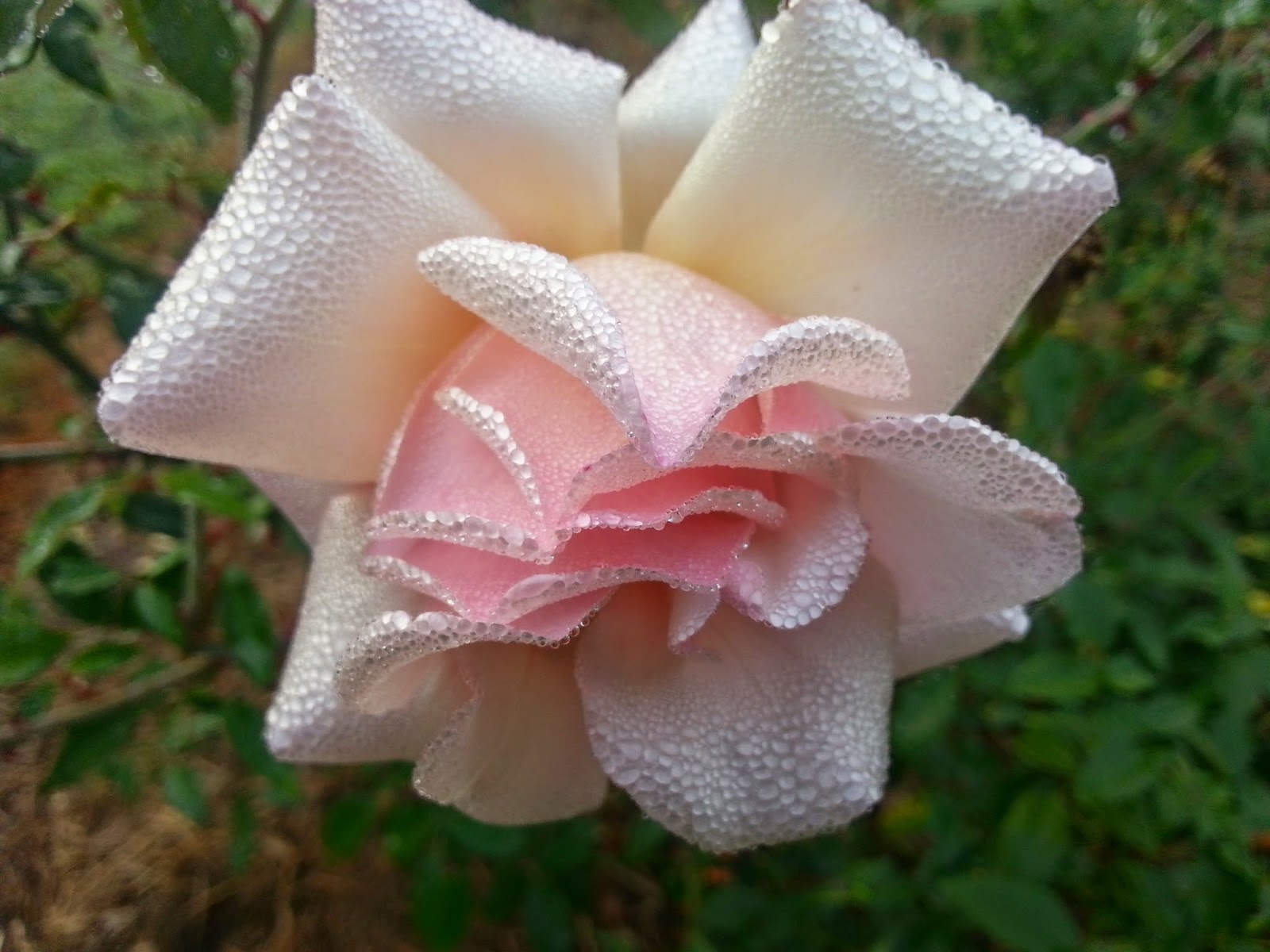
breathe in the peace and beauty 
and connect again with a sense of wonderment ... 


Tuesday, March 17, 2015

Flower-craft Workshop - Tussie-Mussies and Nosegays .. AT MY ROSE GARDEN


Tussie-mussies are tiny posies or nosegays filled with fragrant flowers and herbs gathered from cottage gardens and hedgerows.  The name ‘nosegay’ derived from medieval English,  immediately invokes the idea of something happy and pleasant for the nose to smell. 

Tussie-mussies were originally attached to the bodice, or a waist band to ward off disease in Elizabethan England when sanitation was less than ideal.   Interestingly, many of the herbs used, such as lavender and rosemary, are now known to contain volatile oils with antiseptic properties. 


During the Victorian era with improved sanitation, the humble tussie-mussie was used as a pretty gift to give as a token of appreciation and love.  The flowers were purposefully included according to their meaning.  Flowers have been attributed symbolic meanings across different cultures in literature and art throughout the ages.  In Victorian England, a whole language of flowers evolved giving each tussie-mussie a unique message for the recipient that could not be spoken in public. 

Around the 1970’s there was a resurgence of interest in tussie-mussies, with dried flowers bunched together inserted into the centre of lace paper doilies.  While pretty, they quickly lost their fragrance and colour. 


Today, it is possible to create pretty tussie-mussies or nosegays with fresh flowers and herbs that invite us to breath in their strong fragrance and take a moment to ‘smell the roses’.    And we can even re-create the ‘language of flowers’ and give these as gifts with our own special meaning.  

Of course, it might be useful to attach a card explaining this for the recipient as there are often multiple meanings for individual flowers.  For example, a rose may have meanings as diverse as ‘love, modesty or infidelity’ according to its colour. 

(See Vanessa Diffenbaugh’s Dictionary of Flowers for an updated list of meanings;  http://www.randomhouse.com/rhpg/features/vanessa_diffenbaugh//flower-dictionary/)


Tussie-mussies differ from posies in that they are arranged in concentric circles, with the most significant and meaningful flower placed in the centre.  To make your tussie-mussie, gather one perfect just-opened rose bud, and 3 or 4 bunches of fragrant herbs and flowers.  Lay these out in separate bunches in order of how you plan to arrange your tussie-mussie.  


Starting with the rose-bud, add a circle of contrasting flowers or herbs, then add concentric circles of herbs.  The final circle of fragrant herbs or flowers is finished off with contrasting foliage to frame the tussie-mussie.   Simply tie with twine or ribbon to make the perfect gift with a hidden message. 

Gorgeous!!


Thursday, February 26, 2015

Flower-craft Workshops - 'Something Beautiful' .. AT MY ROSE GARDEN

Summer’s end is here, with a final explosion from Tropical Cyclone Marcia devastating communities in central coastal Queensland.  In our corner of the Sunshine Coast hinterland we received 445 mm of rain from her aftermath.  Our precious stained glass windows were taped up against the predicted onslaught, but we were spared any destructive winds.  Although there was local flooding, we were blessed to have a safe, dry home with electricity and food in abundance.  


In our garden, spared from TC Marcia’s fury, the faded beauty of the late summer roses stands out in stark contrast to the destruction of Marcia’s onslaught further north.   Individuals, families and communities in and near Yeppoon and Rockhampton are right now living without fresh water supplies, no electricity, limited communication, and the daunting tasks of clearing then rebuilding.  Yet a key theme, ever-present in Australia during times of disaster, is that of people supporting each other and sharing with those who have lost everything.


So enjoying the loveliness of late summer evenings AT MY ROSE GARDEN seems almost churlish by comparison.  Yet the scent of freshly mown grass and the perfumes of overblown roses and spicy herbs are a joy to be savoured and acknowledged.   Who can resist the warbles of currawongs as they call to each other from across the garden?  And the happy bounding of our newest assistant, our Smithfield puppy, Milly, as she seeks out new rosebuds to taste and lovely smelly things to sniff is irresistible.


Meanwhile, supporting our local community is high on our agenda, and so with that in mind, we are launching our Autumn ‘Something Beautiful’ Flower-craft workshops.   Participants will learn how to choose lovely old-fashioned heirloom roses from our garden; cut and gather roses for lovely posies and select gorgeous perfumed herbs to mix with them.   And along the way, enjoy a good old-fashioned morning tea. 

Funding from our ‘Something Beautiful’ workshops will go toward our fledgling work with young women (and their children) in the Sunshine Coast community.   Our focus is creating opportunities for young women in need through horticulture and flower-craft workshops.   
Half-day ‘Something Beautiful’ Flower-craft workshops will be held at our garden, 'Edgeworth Lley' in the Sunshine Coast Hinterland, in March and April this year.   Cost is $75 per person.   Includes access to our garden, all materials and an old-fashioned morning tea.

Dates:       Thursday, 26 March – 9.30 am – 12.30 pm.
                Thursday, 23 April  –  9.30 am – 12.30 pm.  

Bookings are essential as places are limited.  

For further information and to book your place for our Flower-craft Workshops contact us at Edgeworthroses@skymesh.com.au

Visit our Facebook page, ‘Edgeworth Lley, Heirloom Roses’.


You will be doing ‘Something Beautiful’ and helping to support those in need. 


Monday, February 16, 2015

Heirloom Roses - What is Luxury? .. AT MY ROSE GARDEN

How easily we can dismiss the familiar.  After 3 or 4 years of drought and limited out of season rain, the rose garden is not as advanced as we planned.  And after recent bursts of heavy rain followed by days of extreme heat, some of my favourite roses are struggling.  Our heavy clay soil has meant that some roses have wet feet at the same time as exposing their leaves to extreme heat.   Late summer is never the best time of year for our roses, with fewer and smaller blooms.  

Meanwhile, general tasks have become more urgent; weeding, laying acres of mulch, deadheading so that blooms will flourish again in the cooler autumn, checking for disease, cutting back rose-canes to prevent further die-back, hoping against hope that some struggling roses will pull through.  


The many gorgeous roses flourishing despite the extremes in weather, the exuberant climbing species roses sending up long canes, the numerous bunches of perfumed, gorgeous heirloom roses picked, have all been largely overlooked.  


So it took a chance read of a slightly tattered, well thumbed 2013 Vogue Living magazine at our local cafe to help me gain perspective. 

An article interviewed ‘famous’ personalities exploring the idea of luxury; what defines luxury for each person.  In our culture of plenty, the concept of luxury is often annexed to status and wealth.  The accoutrements of status are purchased and displayed; a house in a desirable location, luxurious motorcars, designer clothing and jewellery, and so on. 

A culture that largely defines luxury only as an object that can be purchased misses out on the truest of luxuries.  The seemingly insignificant; birdsong, leaves blowing in a breeze, sunlight on our back, green grass and trees that provide respite and shade to be enjoyed in this harried, torn-with-strife world. 


Alice Waters, advocate for seasonal, locally grown food and chef/proprietor of Chez Panisse Restaurant in California, defined her concept of luxury as an ‘object’ from nature.  She described her friend’s garden full of heirloom roses; each rose filled with perfume a ‘work of art’.  I love her brief description invoking the idea that we can draw from nature an appreciation for beauty, a sense of awe at the creative and unique.


Roses have been admired and painted since antiquity.  Redoute (1759 – 1840) is renowned for his exquisite watercolours of roses, building on the traditions of early Dutch painters of botanical subjects.  A prolific artist, Redoute continued to paint even through the French Revolution, bringing beauty to a world of horror.


So now, as I go out into the garden to dead-head the roses, I can again appreciate the luxury of picking any number of beautiful blooms, of filling buckets with glorious ‘works of art’.  

Thank you Alice Waters for reminding me what true luxury is.  


Thursday, February 5, 2015

Heirloom Roses - Tea Roses as Cut Flowers .. AT MY ROSE GARDEN

It is no surprise that roses are used world-wide as cut flowers.  Florists use roses every day in their floral arrangements, regardless of the season.  While we have roses year round, we are largely limited to stiff, glass house grown varieties.    Although still beautiful, many roses grown under climate-controlled glass have somehow lost the natural beauty of the old-fashioned, heirloom varieties. 

Of course, David Austin's English roses, with their full blooms and strong perfume, have done much to influence the preference for older roses, particularly for brides.  Yet we still expect that the roses we buy should have long stems, with tall pointed buds that open to full petalled blooms.  The sacrifice of limited perfume is often deemed a fair exchange for vase longevity. 

And glass house grown roses travel fairly well; much better than their older cousins.  So roses flown interstate and internationally are acceptable as an alternative, even preferable, to locally grown, ‘garden’ roses.  However, there is a small groundswell trend to locally grown, less miles travelled, cut flowers.  Many artisan florists, dedicated to their art, use garden roses when they can find them (see http://www.twigandgrace.com/).

In the United Kingdom the shift toward more sustainable, locally grown cut flowers is growing (‘xcuse the pun).   Innovative cut flower growers such as Georgie Newbery, proprietor of Common Farm Flowers and author of The Flower Grower’s Year, (see her inspirational blog at www.commonfarmflowers.com) are leading the movement toward locally grown cut flowers. 

The challenges of growing cut flowers locally in Australia are somewhat different to that of the United Kingdom; larger areas to traverse between growers across a number of states and generally drier, hotter climatic differences.  Yet if we adjust our taste for cut roses to include the elegant, softly coloured, fragrant blooms of Tea roses, pre-dating Hybrid Teas, we will re-discover roses that adapt well to the Australian climate. 


Tea rose, Mme de Watteville


As there is no native rose species in Australia, many of the Tea roses still available in Australia were planted by early settlers.  Blooming almost year round, Tea roses are tough and long-lived with bushes found surviving near long abandoned cottages and beside graves throughout Australia.  (See the superb book, Tea Roses:  Old Roses for Warm Gardens by Western Australian authors Chapman, Drage, Durston, Jones, Merrifield and West, Rosenberg Publishing PL 2008, for a comprehensive history of Tea roses in Australia.)  

Tea rose, Comtesse de Labarthe

Tea rose, Lady Hillingdon


Tea roses as cut flowers were recommended by the influential English garden designer, Gertrude Jekyll.  She states that Tea roses last ‘quite a day longer’ than Hybrid Perpetuals.  She also offers, rather idealistically, ... ‘so delightful to any one who lives a fairly simple life in the country to go out and cut a bunch of Roses, that the need for their often renewal is only an impulse towards the fulfillment of a household duty of that pleasant class that is all delight and no drudgery. (http://www.rosarian.com/jekyll/roses/chapter15.html)

While most of us do not have easy access to country gardens, we could enjoy the almost year round blooming of at least one or two Tea roses.  Tea roses come in many sizes, with smaller varieties suitable for growing in pots.   Or they can be grown in a small garden as easy care shrubs. 


A vase of lovely, fragrant Tea roses cut fresh from the garden is a rare luxury these days ... but a luxury worthy of revival. 


Tuesday, January 27, 2015

Rose-craft Workshop - Rose-scented oil .. AT MY ROSE GARDEN

Sometimes it is just lovely to make something luxurious from simple ingredients.  Rose-scented oil is one of those time-less luxuries that you can make in your home kitchen, and it is easy and fun to do.  There are only two simple ingredients; you will need  a good quality food grade oil, such as virgin olive oil, and  roses you know are free from nasty sprays.  This lovely infused oil can be used in cooking as well as in home-made cosmetics and toiletries.  

What you will need:

A good quality base oil (to infuse with fresh organic rose petals).  (We use Australian grown and pressed quality olive oil, such as Red Island or Cobram Estate.  Or you may prefer to use almond oil if making small quantities.)

Fresh non-sprayed rose petals (make sure they have not been sprayed with pesticides or fungicides).

Clean, sterilised wide-mouth glass jars with screw top lids.

A wooden skewer.

To make:

Pick several of your most fragrant roses, making sure they are free from toxic sprays.  It is best to pick your roses in the morning before they have been exposed to the full sun.  This will ensure they retain as much fragrance as possible.  Rinse picked roses quickly under cool running water and shake to dry. 


Pluck the petals from your roses to give at least one cup of fresh rose petals when well packed. 


Take your clean glass jar and pack a layer of fresh rose petals in the bottom.
Add enough oil to cover the rose petal layer.  Now add another layer of rose petals and cover with the oil.   Repeat until you have filled the jar.  This method minimises air locks and ensures each layer of petals is well covered with oil. When the jar is filled to the top with rose petals and oil, ensure the rose petals are completely covered with oil.  Push any exposed petals down below the oil with the wooden skewer.  Seal jar tightly with screw top lid.


Now place your jar near a kitchen window where it will be warm but not hot.  Do not place your jar of rose-scented oil in direct sunlight.  The warmth from your kitchen will allow the rose oils to slowly infuse your base oil with a lovely rose fragrance.  Leave the jar for 2 weeks before opening.  

To finish:
Strain the oil to remove the rose petals.  Discard the petals.  Your rose oil will smell beautifully of fresh roses.   (For a stronger fragrance, repeat the infusion process with fresh rose petals.)
Pour your rose-infused oil into another clean glass jar or decanter and store in a dark cupboard. 
Your rose-scented oil is now ready to use in home-made toiletries and cosmetics or simply as a moisturiser before you shower.  

You can also use this oil in the kitchen in numerous recipes.  Use as a dressing over fresh summer salads and in vinaigrette and mayonnaise, as well as in cakes, pies and biscuits.  


There's almost no limit to the uses for this luxurious rose-scented oil!  


Monday, January 19, 2015

Something Beautiful - in miniature ... AT MY ROSE GARDEN

Sighted on an early morning walk, miniature blooms of Leptospermum species, covering the tree in clouds of white blossom.   


Commonly called Tea Tree, this member of the Myrtaceae family is largely endemic to Australia.  Traditionally used by early settlers to make a tea by boiling its leaves in water.  A valuable source of nectar, it is still used in honey production throughout Australia.  

Tea Tree's tiny flowers also make a lovely addition to herbal and rose posies, adding a fragrant touch of the Australian bush - 'Something beautiful' in miniature.