Wednesday, May 4, 2016

A Mother's Day Legacy .. AT MY ROSE GARDEN

The concept of leaving a legacy is all too often discussed in monetary terms.  But the legacy my mother left to her grandchildren is incalculable;  a love of family, cooking beautiful food, the beauty of simplicity, and doing small acts of kindness that make the world a little better for others.


And as I look toward the next generation, I see the legacy my daughters and daughter-in-law have inherited and that they in turn are passing onto their children, our grandchildren.


So as we celebrate Mother's Day  I wish for a world where our grandchildren can grow up safely, with the ability to thrive and enjoy the many wonders of the natural world.  A natural world without exposure to harsh toxic sprays that are too often seen as a 'necessity' in order to grow food and flowers.


I wish for my grandchildren to experience a natural world that is still safe as well as beautiful, with abundant wonders and delights that surprise; especially when they visit their grandmother's rose garden!!


And as their grandmother, my joy will be complete in watching their childish delight as they explore the natural world around them; such as spying a tiny green frog snuggled among the rose petals;


.. or counting dewdrops on a spiderweb draped between rose bushes;


.. pondering ragged holes chewed into a leaf by a cheeky caterpillar;


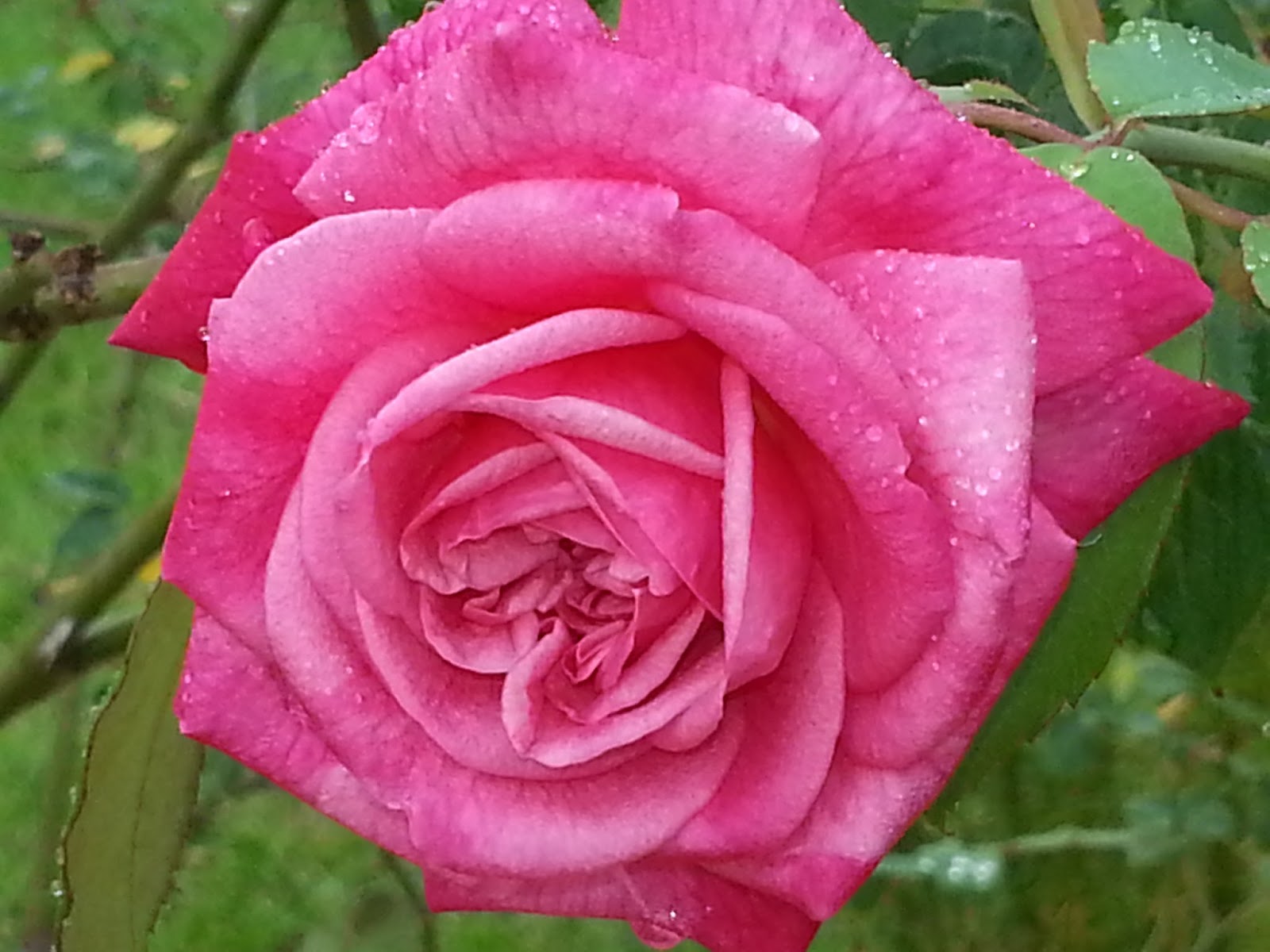
.. seeing buds open into full blown blooms;


.. blooms they can safely bury their noses in and breathe in gulps of fragrance;


.. picking daisies with abandon;


                  .. and watching in wonderment the glory of a sun setting 


that is not distorted by smog and toxic fumes.


A legacy I wish to leave my grandchildren consists of numerous simple acts; choosing not to use pesticides and toxic fumigants as part of the treatment for herbs, vegetables and flowers.


Where food and flowers are grown as nature intended, in time with the rhythms of the seasons. 


And where the best of age-old wisdom and scientific knowledge are integrated in sustainable horticultural expertise.


As my mother taught me, small acts can have a lasting impact.  


So when you order flowers this Mother's Day, ask for local flowers that are grown sustainably ..  


That's the legacy I'd like to leave my grandchildren. 


Friday, April 29, 2016

Roses You Can Sniff .. AT MY ROSE GARDEN

Our heirloom roses don't look or smell like the usual cut flowers you might find at the supermarket florist section.  And that's something we're very proud of.  


Most people aren't aware that imported flowers or traditionally grown cut flowers generally have high levels of pesticide residue.  Not something you want to bury your face in and sniff.
  

But we encourage people to bury their noses in our roses and sniff their divine fragrance because we don't use pesticides in our gardens.


Imported fruit and vegetables are checked for high levels of pesticide residue, yet imported cut flowers  are not checked for high levels of pesticide residue.  Which means you may want to hold off sniffing those imported roses (which disappointingly rarely have perfume!).


Instead, we rely on nature's little warriors to keep pests in the garden under control.  
That means that our rose bushes might have hidden heroes amongst their leaves.  


And one of these hidden heroes is the spider!  There is no need to be frightened of these little spiders as they're not poisonous to humans and they're only interested in feeding on pests in the garden.


And if you walk around our garden early in the morning you may even see some of their artworks.


Some of these art installations are cleverly embedded with bright dewdrop jewels!  


And if you're very lucky, you may even witness a hatching of hundreds of tiny spiders.  Not the prettiest sight perhaps, but it makes us feel good knowing these little spiders will go to work and feed on pests such as caterpillars, aphids and even grasshoppers.  


So we don't need to soak our roses in pesticides to protect them from pests.  And because of that our roses can grow as nature intended, without looking artificial and unnatural.   


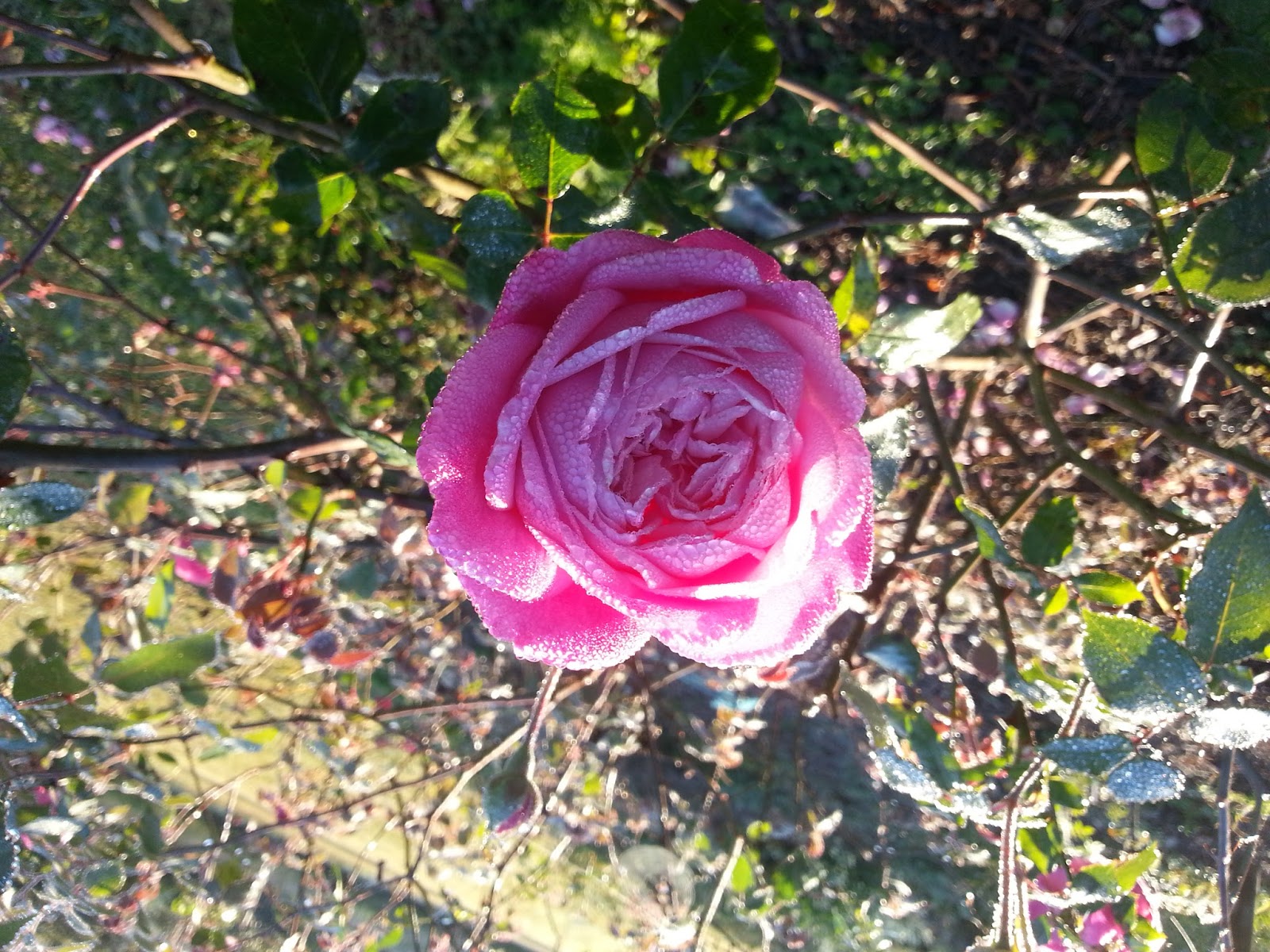
So we can grow this lovely heirloom Tea rose, Comtesse Riza du Parc, with her gorgeous buds as she was grown over a century ago, without pesticides.  And it is safe to bury your nose in her silken petals and sniff her delicate perfume.  


So next time you decide to give a gift of roses to that special someone ask your local florist for locally grown roses that are not dripping in pesticides or preservatives.  

You might be surprised at how beautiful roses grown without pesticides can be ..


Monday, April 25, 2016

A little taste of 'yellow' in the rose garden! .. AT MY ROSE GARDEN


Yellow is not my favourite colour in the garden.  Yet I am drawn to soft muted forms of yellow, such as cream, burnished gold and especially lemon.  In fact yellow and white are often found  together in nature.  And because they go together naturally, they give a feeling of freshness and warmth to our rose garden's colour scheme.


This natural combination can be seen often around the garden, such as in this lovely white flowering 'butterfly bush' or Buddleia.  The yellow centre in each of the tiny flowers brightens and complements the whole bush.  And the fragrance is honey-sweet.  No wonder the butterflies love it so much! 


This combination of yellow and white is also seen in the lovely climbing Noisette rose, Lamarque, loved for its fragrant white flowers that are highlighted in the centre with yellow tipped stamens.  And the fragrance also has a hint of lemon!


And then there's the exquisite Tea rose, Perle de Jardins, with soft lemon buds and blooms. The fully opened flowers are beautiful in bouquets and have a soft, dry tea fragrance that doesn't overpower a hand-held bouquet.  


The well-lovedTea rose, Lady Hillingdon, is often referred to as an apricot colour, but when the open flower is back-lit by sunlight it is hard to decide if the colour is soft buttery yellow, or just burnished gold!  Strangely, the fragrance is often likened to apricots with a hint of dry tea leaves!


For a true rich yellow, there is the Hybrid Tea rose, Candlelight.  We don't grow many modern Hybrid Teas in our heirloom rose gardens, but this one fits well with the heritage roses and is a lovely cut flower.  


One of the other few modern roses we grow for their cut flowers is the Hybrid Tea, Elina. This rose has proven itself to be tough in a difficult situation and produces the loveliest creamy, soft yellow roses.  They're wonderful in bouquets and also blend well with our heirloom roses.


And I can't resist the bright little buttons of  the herb, Tansy.  We grow it among the heirloom roses where it brightens up a little corner in the garden.  This is a tough herb and provides colour almost all year round.  Although it has a pungent perfume you don't need many of its yellow buttons to look gorgeous in posies and bouquets.  


Then there's the white Autumn crocus that grows at the feet of some of our heirloom roses.  Usually it is only identified by a clump of thin leaves, but in Autumn the white flowers open to reveal bright yellow stamens.  A delightful seasonal flourish in the garden!


And finally, one of my favourites in the garden, the lemon buds of the Hybrid Musk rose, Pax.   This lovely arching rose bush was bred in the early 20th Century by the Reverend Pemberton who founded the Hybrid Musk roses.  The buds open to slightly double, large white rose blooms, but it is the lemon buds that I love.  They're 'divine' in posies, too. 


So there it is, a little taste of 'yellow' in the garden!  


Sunday, April 3, 2016

‘Flora Therapeia’ (Flower Therapy)

At ‘Edgeworth Lley’ we love to share the benefits and enjoyment of living and working in a beautiful heirloom rose garden through our nature based workshops.


Horticulture therapy is well known for its benefits for people with mental health issues, physical disabilities, people with dementia, and long term unemployed youth, just to name a few. But we know that everyone can benefit from spending some time with nature.  An example is the growing awareness of the importance of ‘nature play’ for children’s development. 


We take our nature based workshops a little step further and use flowers, especially fragrant heirloom roses, as our focus.   Studies have shown that simply smelling the fragrance of roses can bring about a sense of joy and begin the journey of recovery from despair. 


Our Flora Therapeia (Flower Therapy) workshops are designed to assist people in their journey of recovery from trauma and grief.   The natural green space of rolling hills in which our country garden sits provides a safe natural environment where people can spend time touching and smelling the roses. 


The scientific and therapeutic basis for our nature based Flora Therapeia workshops at Edgeworth Lley is an environmental psychology theory called Attention Restoration Theory.  Engagement with the natural environment quiets emotional cognition and facilitates a sense of well-being.  The effort for an individual to focus on the natural environment is effortless, (referred to as ‘soft fascination’), which in turn enables the mind to rest from thoughts of fear, sadness or anxiety, for example.  


In short, spending time in nature is good for the brain, developing new neural pathways that support emotional wellbeing.


I have conducted numerous workshops in my other life as an academic, researching this theory and observing the benefits to individuals from a broad spectrum of backgrounds.  But the common factor is that each person discovers or re-discovers the benefits of ‘just being’ in a natural environment, whether that is a small garden, a park, at the beach, picking flowers or just sitting under a tree.


Time and time again we have seen people relaxing and enjoying the fragrance, texture and colour of our heirloom roses at our workshops.  Sometimes individuals discover for the first time that they can do something ‘creative’ that is beautiful.  Some re-capture their love of flowers and creating, or suddenly realise they can lose themselves just smelling the roses and enjoying the green space around them.    For others it is just a time of ‘breathing’ and focussing on something other than their trauma or grief. 


So when did you last have your ‘fix’ of nature?  

Perhaps it’s time now to seek out a little green space, even a few potted plants on a balcony, and ‘just be’ in nature.  For information about our Flora Therapeia workshops find Edgeworth Lley-Heirloom Roses on Facebook and send us a message.    


Thursday, February 4, 2016

A Mid-Summer Garden

A mid-summer garden in a sub-tropical climate such as ours is very much at the mercy of seasonal changes. All gardens have their challenges, ever-changing and shifting with the seasons, and AT MY ROSE GARDEN the impact of summer is readily evident.  The very nature of gardens though is that each season has challenges as well as spectacular offerings; like gorgeous sunsets and looming clouds heralding summer storms.  


Until the summer rains come, the garden is suffering from limited water, hot winds and high temperatures. And our grey, cracking clay soil becomes parched and splits to reveal deep crevices.  Our mantra is 'mulch and more mulch' but as a relatively young garden we are years away from a deep rich soil that retains moisture well.  Nevertheless we are seeing positive changes in the soil, with the garden beds showing signs of improvement in the soil structure.  


And this means that despite (or due to) the heat, flowering herbs and other lovely things are thriving; feverfew, tansy and cosmos to name a few!  


While some roses are flagging temporarily, other roses have taken no notice of the mid-summer heat wave. Take for example the Noisette rose, Milkmaid.  Bred to cope with Australian conditions by Alistair Clark in 1925, she has romped untidily to the top of a large archway, threatening to greet and overtake Lamarque (also a Noisette) creeping up the other side.  Unlike Lamarque, Milkmaid flowers only in Spring, so we are expecting a wonderful display of creamy white blooms this Spring.


Rosa Laevigata is equally exuberant, almost completely covering an entire arbour on her own.  Her thorns are strong and hooked, perfect for climbing but a little dangerous if you venture too near.  Even though she is a Spring flowering rose too, she will get a good trim before Autumn.  She is already so large that a quick haircut will make little difference to the Spring display!


And the Tea rose, Mrs B R Cant, continually offers up her strawberry pink, blowsy blooms no matter the weather.   She is a reliable bloomer, coping well with extreme weather conditions throughout summer, from hot and dry through to soggy and wet.  And I know that she always has several gorgeous, Tea scented flowers and exquisite fat buds just ready for picking.  In fact, I think she thrives on having her flowers picked so she can produce even more! 


Then there's the gorgeous, pale pink New Dawn, covering her arch in one season.  And Comtesse de la Barthe blooming away with her porcelain pink blooms.  The climbing form of Comtesse de la Barthe is competing with New Dawn as to who reaches the other side of their arch first!  


And who can dismiss the lovely creamy blooms of the early Hybrid Musk, Pax, perpetually blooming through all that summer can throw at it.


Half the fun of creating a garden is that it never stays static and each season has its own special features. And now is the time to enjoy and appreciate this season's delights.